

BUS BAR AND DIN RAIL
WILLELE provides high-quality copper comb busbars and DIN rails for reliable circuit connection and modular panel assembly.
Our phase distribution and circuit breaker busbars ensure excellent conductivity and precise spacing, while DIN rails are made from galvanized steel or aluminum for easy and secure mounting.
All products meet ISO, CE, UL, CSA, and RoHS requirements, with options for custom length, pitch, and insulation color to fit different breaker brands.
WILLELE delivers durable and efficient solutions for compact, safe, and standardized electrical installations.
Our Busbar Product Range
Discover WILLELE’s full selection of copper busbars designed for clean, efficient, and standardized power connections. Each model ensures precise fit, consistent conductivity, and simple integration for panel builders and OEM applications.
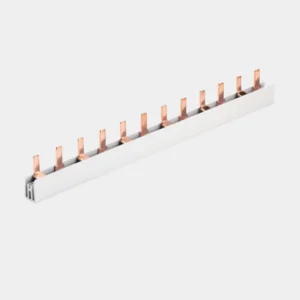
Pin-Type Circuit Breaker Busbars

1-Phase Pin Busbar (M6)
2-Phase Closed Pin Busbar (M6) — Shrouded, 8–16 mm²
2-Phase Pin Busbar (M6) — Dual-Phase, 8–16 mm²
3-Phase Closed Pin Busbar (M6)
3-Phase Pin Busbar (M6)
Pin-Type 1P+N Busbar (M6)
Pin Type Busbar (M6) — 1-Phase, 8–16 mm²
4-Phase Pin Busbar (M6)
1-Phase Pin Busbar (C45)
2-Phase Pin Busbar (C45)
C45 Pin-Type 3-Phase Busbar
C45 Pin-Type 4-Phase Busbar (M6)
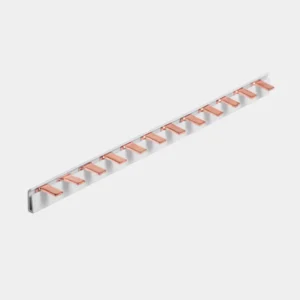
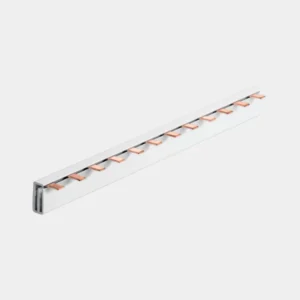
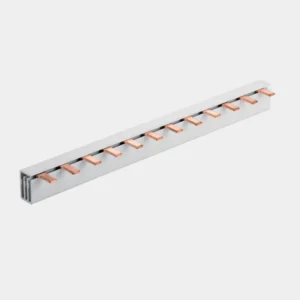
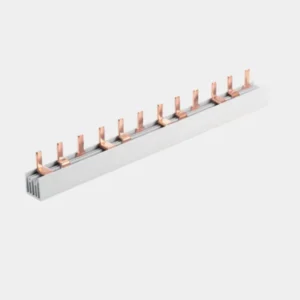
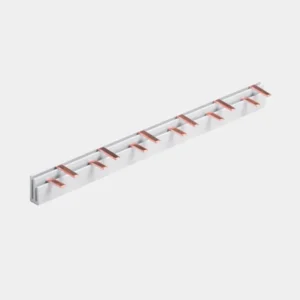
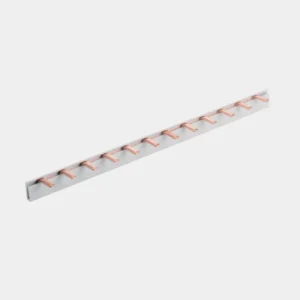
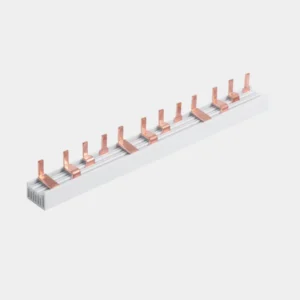

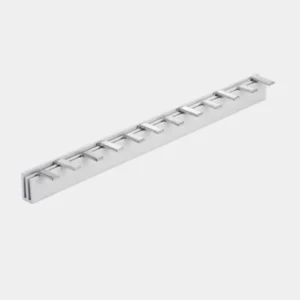
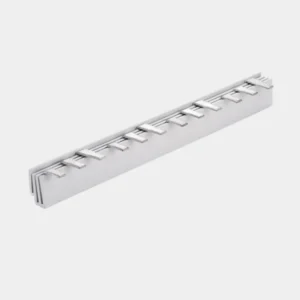
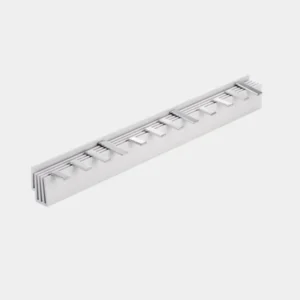
Fork-Type Circuit Breaker Busbars
Fork-Type Four-Pole Bus bar (M6) — 50–80 A, 8–16 mm²
3P+N Busbar (M6 Fork Type) — Three-Phase + Neutral, 8–16 mm²
Three Phase Busbar (M6 Fork Type) — 3-Pole, 8–16 mm²
Three Phase Busbar (M5 Fork Type) — 3-Pole, 8–16 mm²
Two Phase Busbar (M6 Fork Type) — 2-Pole, 8–16 mm²
Single Phase Busbar (M6 Fork Type) — U-Type, 8–16 mm²
Single Pole Busbar (M6 Fork Type) — 1-Phase, 8–16 mm²


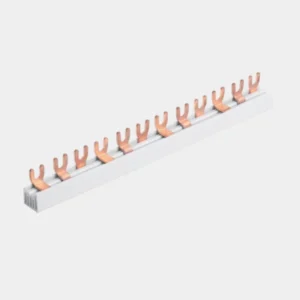


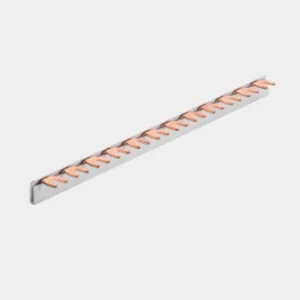
Busbar Accessories & Din rail


Why Choose WILLELE for Your Busbar and DIN Rail Needs
Custom configurations: Thread types (male/female, mixed), heights, diameters and inserts can be tailored to your drawing.
Application-driven guidance: Our team helps match creepage distance, mechanical load and mounting method to your panel spec.
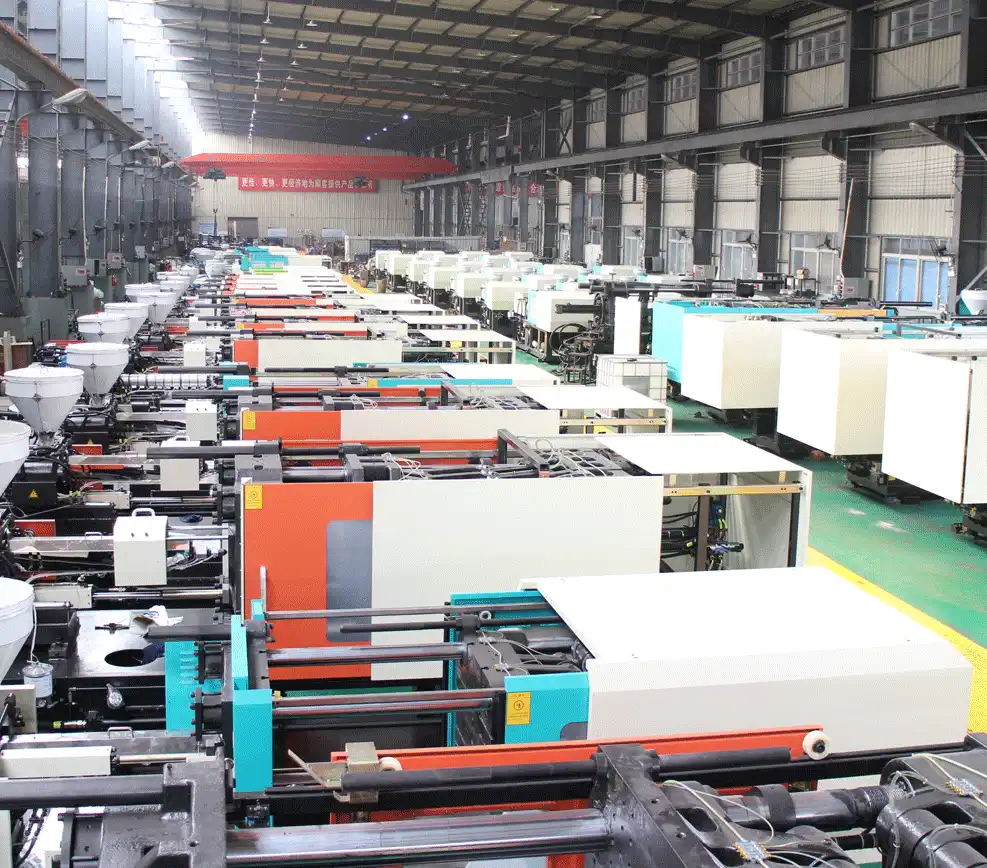
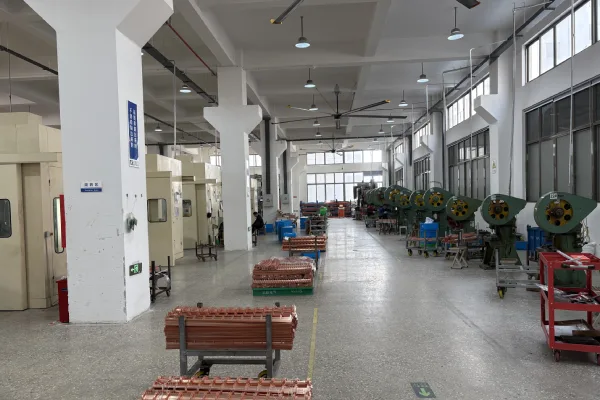
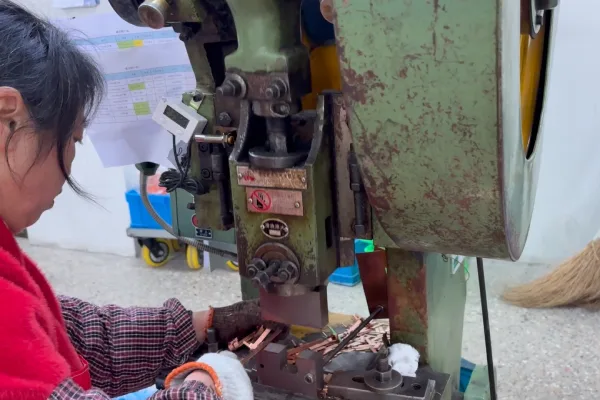
Stable production & QC: Controlled molding, deburring and 100% visual checks ensure smooth surfaces and repeatable torque performance.
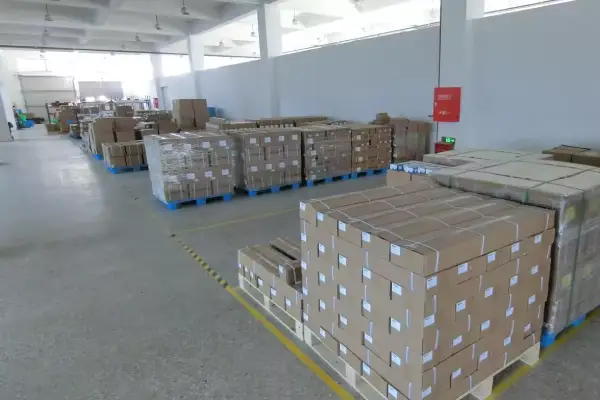
Supply assurance: Flexible MOQs, sample support and on-time delivery for OEM/ODM projects.

WILLELE Full Range of MCB Busbars & Accessories
WILLELE offers a complete selection of MCB busbars and compatible accessories for safe and efficient circuit assembly. Our range covers every essential component — from copper and brass bars to modular terminals and DIN mounting hardware — ensuring reliable integration across various breaker systems.
Available Accessories:
• Busbar End Caps
• Connectors
• 5-Pole Protective Cover & Wing Bridges
• Pan Assembly Busbars
• Copper Bar
• Brass Terminal Block
• Brass Bar
• Terminal Block Box
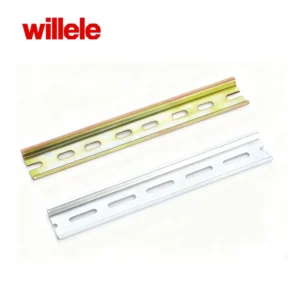
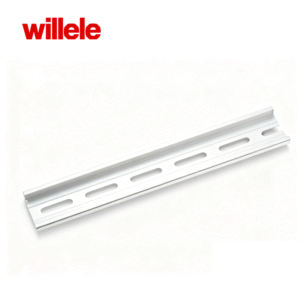
• Steel & Aluminum DIN Rails

Precision Craftsmanship & Superior Materials

Premium Conductive Copper
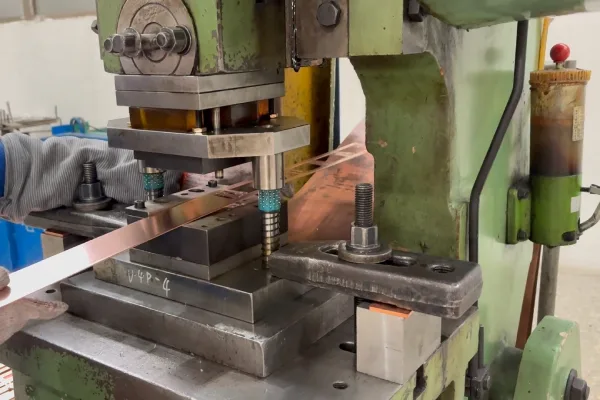
WILLELE busbars are made from high-purity, rolled copper (or aluminum upon request) to achieve excellent electrical conductivity and strong mechanical performance. The contact teeth are precisely interlocked to ensure secure fitment and long-term reliability.
Refined Finish & Accurate Dimensions
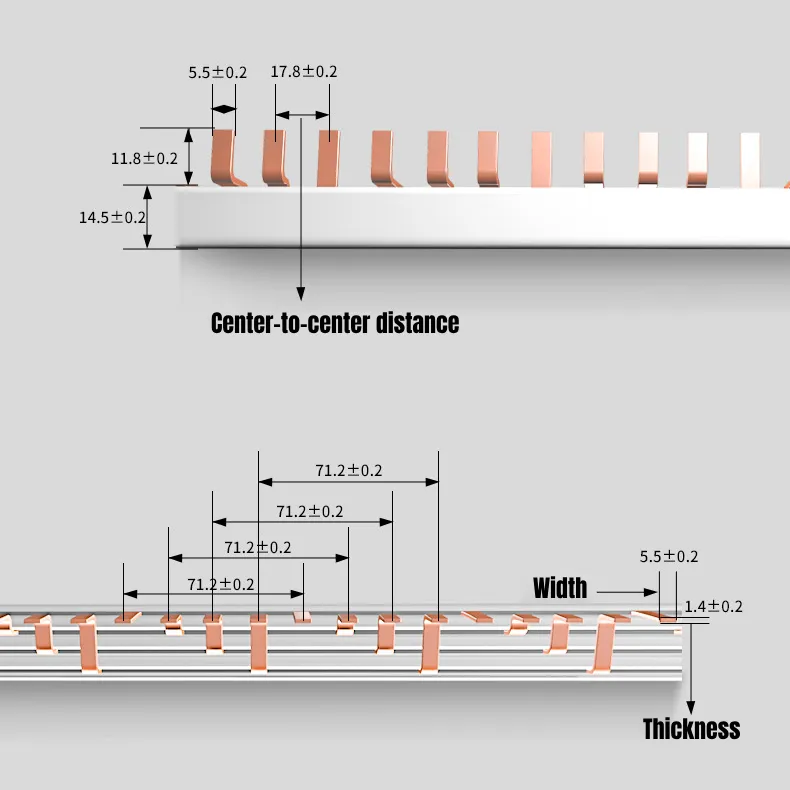
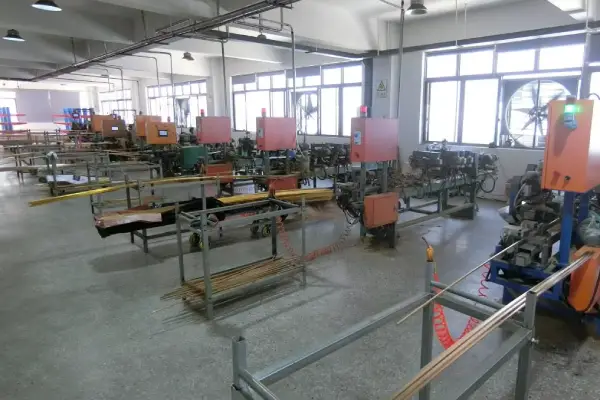
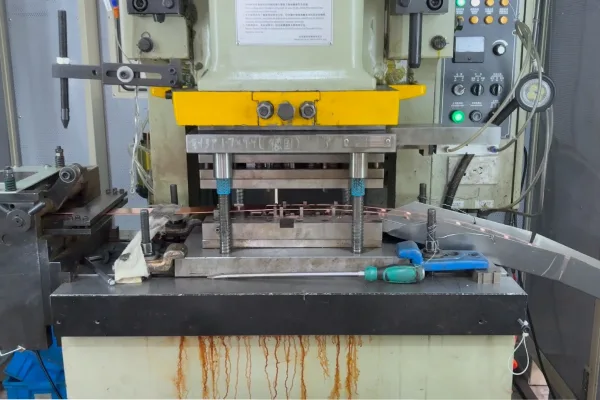
Each busbar undergoes precision forming and surface treatment for a smooth, burr-free finish. Strict dimensional control ensures consistent width and flatness, matching international installation standards.
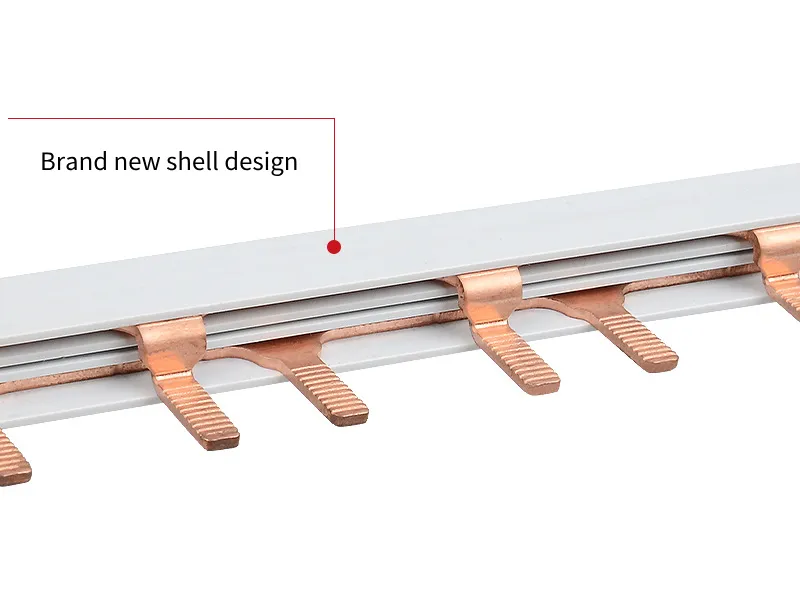
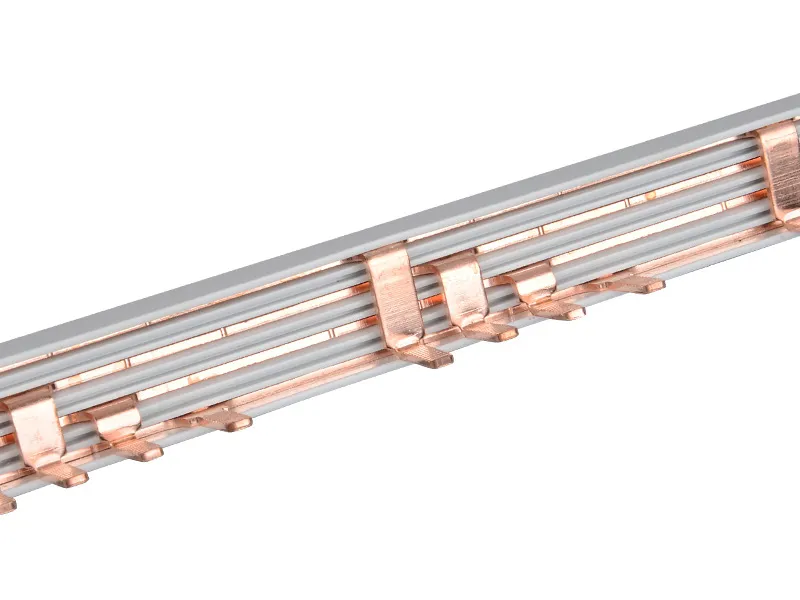
Consistent Quality
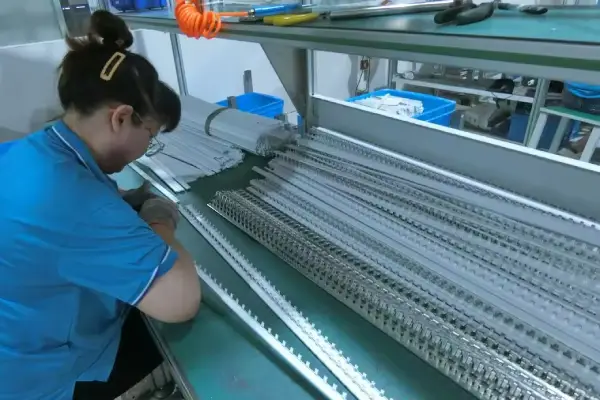
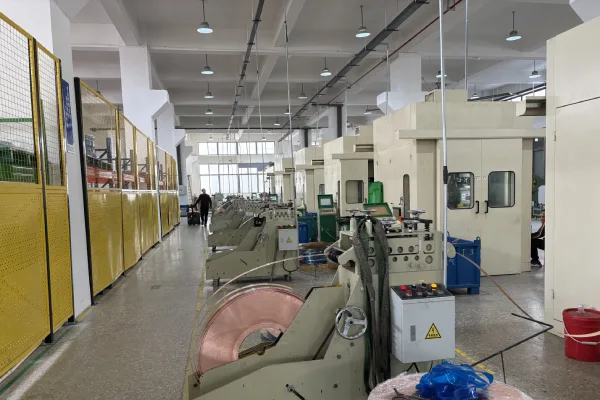
Every production batch follows uniform manufacturing procedures, delivering a stable texture, neat alignment, and dependable electrical performance that panel builders can trust.
MCB Busbar Dimensions and Size Chart
WILLELE provides multiple busbar configurations to suit various MCB connection types.
All models share a standard cross-section of 8–16 mm², with available lengths of 210 mm, 1000 mm, and 1016 mm, and rated for 50–80 A current capacity.
Each type is designed for accurate phase alignment and reliable current transmission in 1-phase, 2-phase, 3-phase, and 4-phase systems.
MCB Busbar Dimensions and Size Chart
| Model Series | Phases | Cross Section | Length Options (mm) | Max Current (A) |
|---|---|---|---|---|
| S-1L | 1-phase | 8–16 mm² | 210, 1000, 1016 | 50–80 |
| S-2L | 2-phase | 8–16 mm² | 210, 1000, 1016 | 50–80 |
| S-3L | 3-phase | 8–16 mm² | 210, 1000, 1016 | 50–80 |
| S-4L | 4-phase | 8–16 mm² | 210, 1016 | 50–80 |
| S-3L + N | 3P + N | 8–16 mm² | 210, 1000 | 50–80 |
| P-1L | 1-phase | 8–16 mm² | 210, 1000, 1016 | 50–80 |
| P-2L | 2-phase | 8–16 mm² | 210, 1000, 1016 | 50–80 |
| P-3L | 3-phase | 8–16 mm² | 210, 1000, 1016 | 50–80 |
| P-4L | 4-phase | 8–16 mm² | 210, 1016 | 50–80 |
| P-1 + N | 1P + N | 8–16 mm² | 210, 1000 | 50–80 |
| P-1 + N-LE | 1P + N-LE | 8–16 mm² | 210, 1000 | 50–80 |
| C-1L | 1-phase | 8–16 mm² | 210, 1000, 1016 | 50–80 |
| C-2L | 2-phase | 8–16 mm² | 210, 1000, 1016 | 50–80 |
| C-3L | 3-phase | 8–16 mm² | 210, 1000, 1016 | 50–80 |
| C-4L | 4-phase | 8–16 mm² | 210, 1016 | 50–80 |
Fork-Type MCB Busbar Dimensions
| Model Series | Phases | Connector Type | Cross Sections | Length Options (mm) | Max Current (A) |
|---|---|---|---|---|---|
| F-1L | 1-phase | Fork (M6) | 8–16 mm² | 210, 1000, 1016 | 50–80 |
| F-2L | 2-phase | Fork (M6) | 8–16 mm² | 210, 1000, 1016 | 50–80 |
| F-3L | 3-phase | Fork (M6) | 8–16 mm² | 210, 1000, 1016 | 50–80 |
| F-3L (M5) | 3-phase | Fork (M5) | 8–16 mm² | 210, 1000, 1016 | 50–80 |
| F-4L | 4-phase | Fork (M6) | 8–16 mm² | 210, 1016 | 50–80 |
| G-1L | 1-phase | Fork (M6) | 8–16 mm² | 210, 1000, 1016 | 50–80 |
| G-2L | 2-phase | Fork (M6) | 8–16 mm² | 210, 1000, 1016 | 50–80 |
| G-3L | 3-phase | Fork (M6) | 8–16 mm² | 210, 1000, 1016 | 50–80 |
| G-4L | 4-phase | Fork (M6) | 8–16 mm² | 210, 1016 | 50–80 |
| G-3L + N | 3P + N | Fork (M6) | 8–16 mm² | 210, 1000 | 50–80 |
WILLELE Busbar Step-by-Step Installation
Before starting, loosen all terminal screws and place the highest-rated MCBs/RCBOs closest to the main incoming line. Follow the steps below for a safe, precise installation.
- 01 Slide the MCB onto the busbar, ensuring firm seating and correct alignment on the mounting rail.
- 02 Tighten terminal screws to the recommended torque for reliable electrical contact.
- 03 Insert busbar teeth fully into terminal cages, seated above any cable links.
- 04 Connect conductors to the correct MCBs/RCBOs and to neutral/earth terminals as labeled.
- 05 For aluminum conductors, clean and brush contact areas, apply conductive grease, then re-tighten.
- 06 Use copper cables from 18–4 AWG (0.75–25 mm²) and tighten line/load terminals to max 2 N·m (17.5 in·lb).
Get Your Free Busbar Sample
We’re pleased to offer complimentary busbar samples—tell us the type or size you need, and we’ll arrange it.
✚ Get Sample NowMore Than Just a Busbar Manufacturer
At WILLELE, we pair dependable products with responsive support. We keep standards high and tailor details to your project so you can build clean, reliable panels—on schedule.

Service Consultation
Have straightforward specs or a quick question? Our team gives practical, engineering-level advice to help you choose the right model and configuration without the runaround.
Busbar Recommendations
Not sure which type fits your breaker brand or pitch? We’ll provide clear, project-specific recommendations (pin or fork, phase options, lengths, insulation) at no charge.

Logistics & Shipping Support
Need help moving goods from our factory to your site? We can coordinate forwarders, optimize packaging, and suggest routes to keep deliveries predictable and cost-efficient.
Installation Support
From terminal torque to pitch matching, our engineers offer step-by-step guidance for smooth installation. Remote assistance is available; on-site help can be arranged through local partners where applicable.
WILLELE Bus bar Insulator
Expert Circuit Breaker Bus Bar Knowledge Resources
1) What is an electrical bus bar?
An electrical bus bar (often shortened to bus bar) is a highly conductive copper or aluminum bar that serves as a common power node inside distribution boards and control panels. It receives power from the main feeder and redistributes it to multiple outgoing circuits or MCBs, reducing wiring complexity, resistance, and voltage drop.
For miniature circuit breaker (MCB) applications, common cross-sections are 8–16 mm², and standard lengths include 210 mm, 1000 mm, and 1016 mm, in 1P, 2P, 3P, 4P, 1P+N, 3P+N configurations.
2) MCB bus bar components
Typical elements in an MCB busbar assembly include:
- Straight busbar sections for power distribution along an MCB row
- End caps, covers, and markers for safe, finished installation
- Isolators and circuit breakers to segment and protect circuits
- Device terminals (e.g., cage-style on the MCB) for secure clamping
- Optional shunt-trip/remote trip accessories for safety interlocking
3) Busbar operating principles
A busbar centralizes distribution: power enters at one point, then branches to multiple loads. If a fault occurs, the breaker trips and isolates the affected section. Core functions:
- Conduction: low-impedance path from source to loads
- Distribution: clean, repeatable way to feed several circuits
- Connection: a common node for transformers, power supplies, and devices
- Thermal behavior: the bar’s surface area helps dissipate heat and control temperature rise
4) How do busbars differ from other electrical conductors?
Busbars are rigid, flat or bar-shaped conductors optimized for high current density, quick tap-offs, and orderly layouts inside panels. Compared with flexible, insulated cables, a bus bar offers lower impedance and better heat spreading but is not intended for frequent motion or tight bends. Use cables where flexibility or long runs are required; use busbars for compact, high-current distribution and clean panel building.
5) Types of MCB busbars
- 1P / 2P / 3P / 4P (plus 1P+N / 3P+N)
- Pin-type: copper pins insert directly into MCB terminals for very fast setup
- Comb-type: “comb” profile that feeds many devices along a row
- Fixed-length: factory sizes for common panel widths
- Cut-to-length: trim on site to suit custom layouts
6) Application areas for bus bars
- Building distribution boards: neat splitting of incoming power into multiple circuits
- Data centers: stable, low-loss delivery to racks and critical loads
- Healthcare: reliable power for operating rooms and ICU equipment
- Industrial machinery: internal rails from main feeders to drives and controls
- Renewables: PV combiner sections and wind systems
- EV & stationary storage: lightweight insulated designs or a battery bus bar for high-current DC packs
7) Pin-type vs. fork-type MCB busbars
- Installation: pin-type is typically the quickest; fork-type allows easy removal/rework
- Conductivity: both are efficient; pin-type often shows lower contact resistance
- Use case: fork-type is handy when devices have dual input points; pin-type is broadly universal
- Customization: fork-type can be shortened easily for partial spans
8) Safety features and ratings
MCB busbar systems commonly operate up to 415 V with typical current ranges of 50–80 A for standard comb/pin bars; larger systems can reach 63–225 A depending on cross-section and temperature rise limits. A typical rated impulse withstand is 4 kV. With larger bars (e.g., 36 mm²), the largest practical copper cable is around 6 AWG (≈16 mm²) at the terminal.
9) Busbar selection checklist
- Current capacity: size for maximum load and ambient/altitude conditions
- Voltage rating: match system voltage and surge margin
- Short-circuit withstand: ensure the bar and terminations tolerate fault levels
- Poles & pitch: select 1P/2P/3P/4P, 1P+N/3P+N and correct spacing for your MCB brand
- Compatibility: choose pin-type or fork-type to suit terminal style and layout
- Environment: humidity, temperature, and corrosion exposure guide material and insulation choices
Always follow manufacturer data and local electrical codes during selection and installation.
10) Advantages of copper bus bar vs. aluminum
A copper bus bar delivers higher conductivity, enabling a smaller cross-section for the same current and excellent contact performance with predictable temperature rise. Aluminum is lighter and more cost-effective for long spans or weight-sensitive builds, but it needs proper plating/surface preparation and compatible terminals to maintain low contact resistance. Choose based on current density, space, weight, corrosion risk, and budget.
11) What is a ground bus bar and when is it used?
A ground bus bar provides a dedicated termination point for protective-earth (PE) conductors. It simplifies grounding, lowers impedance back to the source, and helps meet code. Use one whenever several circuits or enclosures require a consolidated, clearly labelled earth bar.
12) Battery bus bar basics
A battery bus bar links cells or modules in EV and energy-storage packs. It must carry high DC currents with very low resistance and minimal temperature rise. Specify material (often copper), plating, thickness/width, hole pattern, insulation clearance, and creepage/clearance distances according to pack voltage, ripple current, and thermal limits.
13) Quality criteria for MCB bus bars
- High-conductivity copper or aluminum with controlled hardness and finish
- Robust, heat-resistant insulation (e.g., PET films/engineering plastics) with clean edges
- Verified temperature rise at rated current (e.g., 50–80 A common; up to 225 A in larger builds)
- Compliance with applicable standards and restricted-substance directives
- Mechanical durability (impact, vibration) and low electromagnetic emissions
- Practical installation features: cut-to-length options, end caps, protective covers, clear marking
14) Testing methods (commissioning & maintenance)
- Visual inspection: look for discoloration, burrs, loose hardware, or damage
- Voltage test: measure line-to-neutral; reading should be close to rated line voltage
- Continuity test: near-zero resistance between the bus bar and device terminals indicates a sound joint
- Insulation resistance: megger between phases and to ground—values must meet spec
- Contact resistance: DLRO test to confirm low mΩ at bolted/clamped points
If a reading is abnormal, stop operation and have a qualified electrician investigate.
15) DIN rail basics and DIN rail mount
A DIN rail (e.g., 35 mm top-hat) is the standardized metal rail used to mount MCBs, RCBOs, power supplies, relays, and control modules inside enclosures.
Devices labelled DIN rail mount clip directly onto the rail, enabling fast installation and maintenance without drilling or custom brackets. (Coverage intentionally excludes “DIN rail terminal block” per your requirement.)
16) Quick specifications you can reference
- Cross-sections: 8–16 mm² typical for MCB busbars
- Standard lengths: 210 mm / 1000 mm / 1016 mm
- Common currents: 50–80 A (standard comb/pin bars); up to 63–225 A for larger sections
- Impulse withstand: ~4 kV
- Materials: copper bus bar (higher conductivity), aluminum (lightweight/cost-effective)
- Configurations: 1P, 2P, 3P, 4P, 1P+N, 3P+N; pin-type and fork-type options
Bus Bar & DIN Rail — Frequently Asked Questions
Quick answers about bus bar, electrical bus bar, ground bus bar, DIN rail, and DIN rail terminal blocks.
Request a Custom OEM Busbar Insulator
WILLELE builds standard and private-label busbar insulators to your drawing—DMC/BMC or epoxy, metric/UNC inserts, non-standard heights & creepage distances. Fast sampling, stable lead time.
GET INSTANT QUOTE NOW